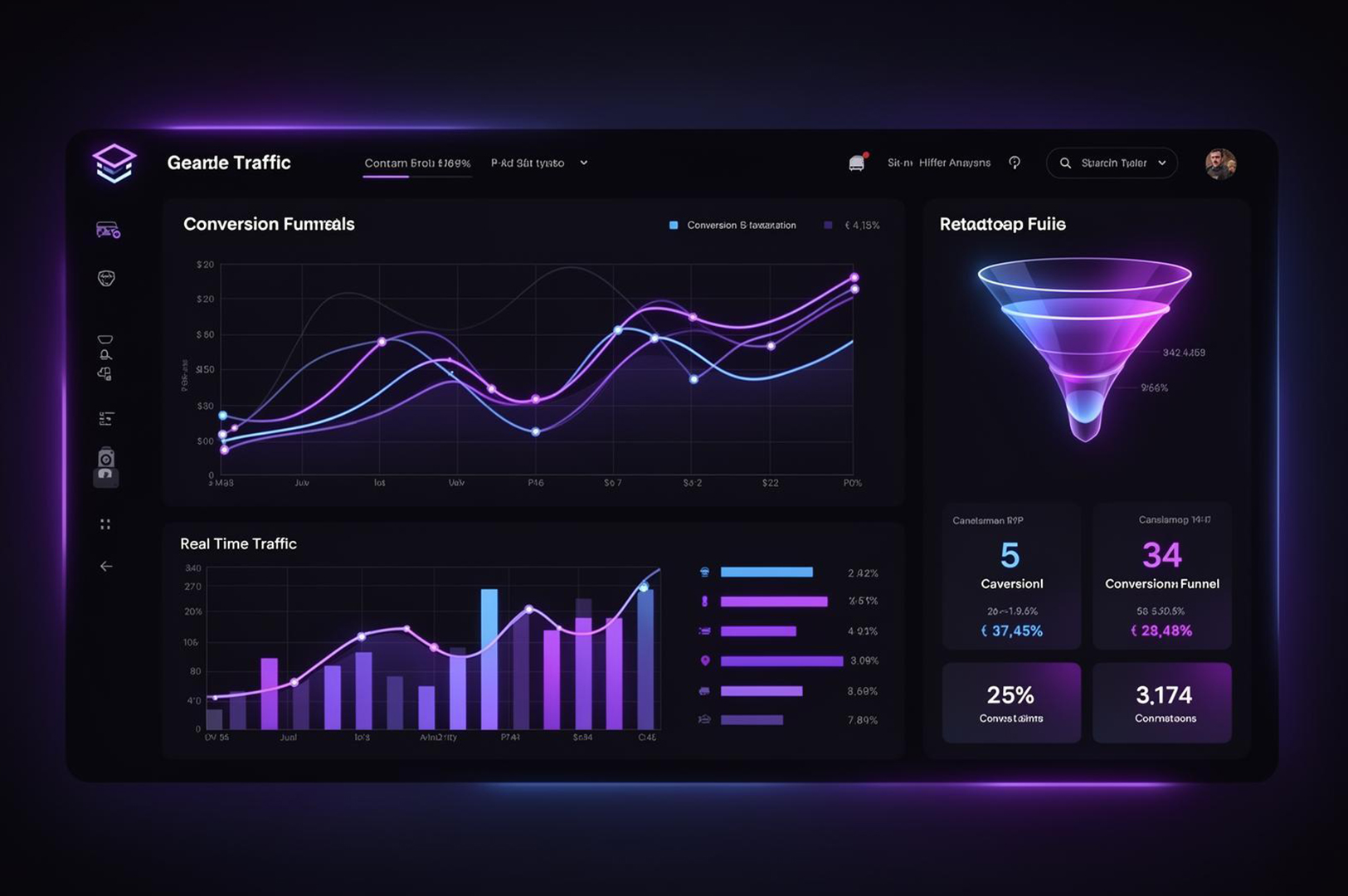
The era of granular targeting is officially over. As privacy updates deprecate cookies and ad platforms lean into "black box" automation, the competitive advantage has shifted from media buying mechanics to creative velocity and data infrastructure.
01. The Algorithmic Black Box
For the last decade, the "growth hacker" archetype thrived on manual adjustments: bid caps, exclusionary audiences, and day-parting. Today, Meta’s Advantage+ and Google’s Performance Max (PMax) have rendered 80% of those levers obsolete. The algorithm is no longer a tool you steer; it's a vehicle you fuel.
This shift requires a fundamental restructuring of marketing teams. The media buyer role is evolving into a "Media Strategist"—someone who interprets signals rather than pulls levers.
Don't get left behind
Join 12,000+ marketers receiving our weekly deep dives on AI, Strategy, and Paid Media.
02. Creative as the New Targeting
With audience definitions broadening, your creative asset is the targeting. If you run an ad featuring a dog, the algorithm finds dog owners. If you feature a luxury home, it finds high-net-worth individuals.
"We are seeing brands produce 10x the creative volume compared to 2022, not because they want to, but because the algorithm demands freshness to maintain efficiency."
Generative AI tools like Midjourney and custom fine-tuned SDXL models allow agile teams to iterate on visual hooks without the bottleneck of traditional photoshoots. The workflow isn't "Idea → Brief → Shoot → Edit"; it's "Prompt → Generate → Test → Iterate".
03. The Data Feedback Loop
While AI handles the creative generation, the human element must own the data architecture. First-party data is the moat. Brands that successfully feed offline conversion data (profit margin, LTV, return rates) back into ad platforms are seeing a 20-30% lift in ROAS compared to those optimizing for generic pixel purchase events.
Related Resource
Download our Technical Guide to CAPI (Conversion API) setup for Shopify brands.
Access the Guide

Dr. Josh
Founder & CEO
In this article
The Algorithmic Black Box
Creative as Targeting
The Data Feedback Loop
Actionable Next Steps
Free Template
AI Creative Workflow Template
Standardize your prompt engineering and asset iteration process.